
Habanero Pepper Farming in Uyo and Akwa Ibom: Complete Guide
Habanero pepper farming in Uyo and Akwa Ibom can serve fresh-produce buyers, restaurants and pepper processors. This step-by-step guide focuses on Habanero (Capsicum chinense)—from choosing seed and raising seedlings to preparing beds, transplanting, crop care, harvest and marketing in Akwa Ibom’s humid environment.
Pepper plants growing in mulched rows. Photo supplied by IbomServices.
Why grow Habanero pepper in Uyo?
Habanero is a very hot, aromatic pepper valued for fresh cooking and processed products. Ripe fruit colour varies by variety. Buyers may include households, market traders, restaurants, sauce makers and food processors. Before planting, ask prospective buyers which colour, size, heat level and delivery quantity they want; do not assume every buyer means the same thing by “Habanero” or “rodo.”
Akwa Ibom already has a pepper-growing and trading base. A recent Akwa Ibom State University study notes constraints such as seed availability, input costs, pests, storage and market connections. Start with a small, well-recorded pilot plot so you can learn your actual costs and buyer preferences before expanding.
1. Choose labelled Habanero seed
Buy fresh, labelled seed from a reputable supplier. Check the cultivar name, lot information, germination guidance and expiry date. Ask what colour the ripe fruit should be and whether the seed is genuinely Habanero. Avoid unlabelled seed if uniform size, colour and harvest timing matter to your customers.
Nigeria’s National Horticultural Research Institute (NIHORT) announced two released Habanero varieties, HORTIPEP 1 and HORTIPEP 2, in 2025. They differ in mature fruit colour and other traits. Check with NIHORT, an agricultural extension officer or a trusted seed supplier for current availability, authenticity and variety-specific recommendations before buying.
2. Raise healthy seedlings
Start seeds in clean plug trays or a clean, well-drained nursery bed. Use a loose, healthy growing medium and protect young plants from heavy rain, direct pounding sun, animals and standing water. Sow shallowly, cover lightly and keep the medium moist—not waterlogged. Clean trays and tools help reduce seedling disease.
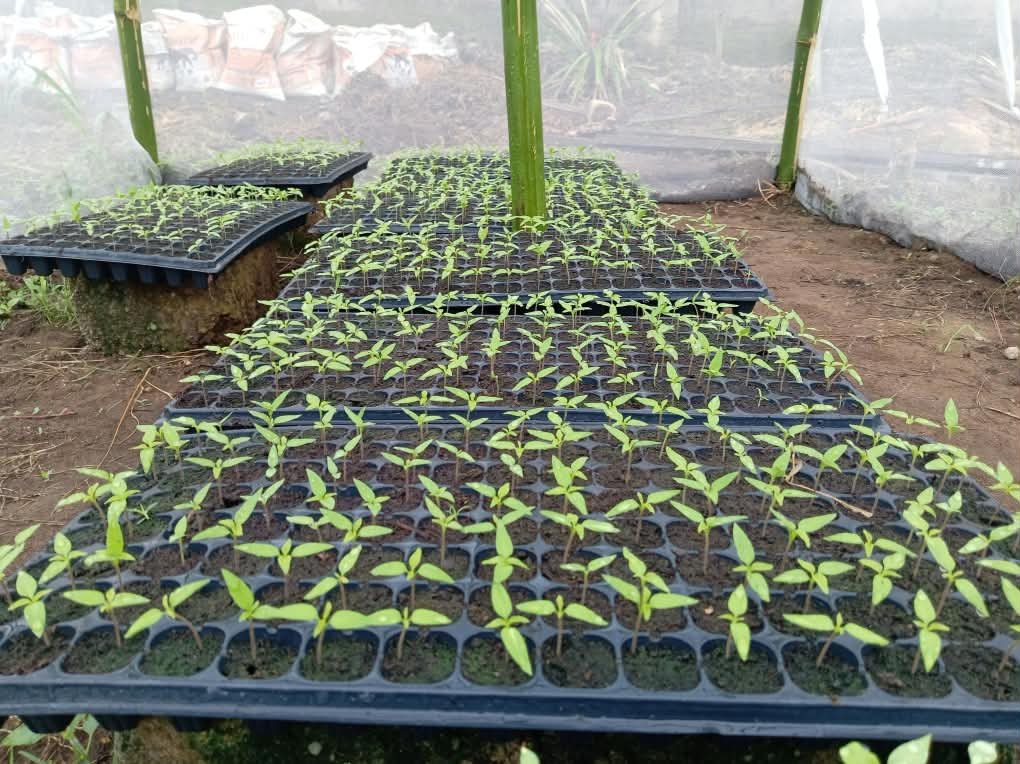
Young pepper seedlings in trays before transplanting. Photo supplied by IbomServices.
Check the nursery often. Remove weak or diseased seedlings and keep weeds down. Transplant sturdy seedlings once they have several true leaves and can withstand field conditions. Harden them gradually by exposing them to outdoor conditions for a short period each day before transplanting.
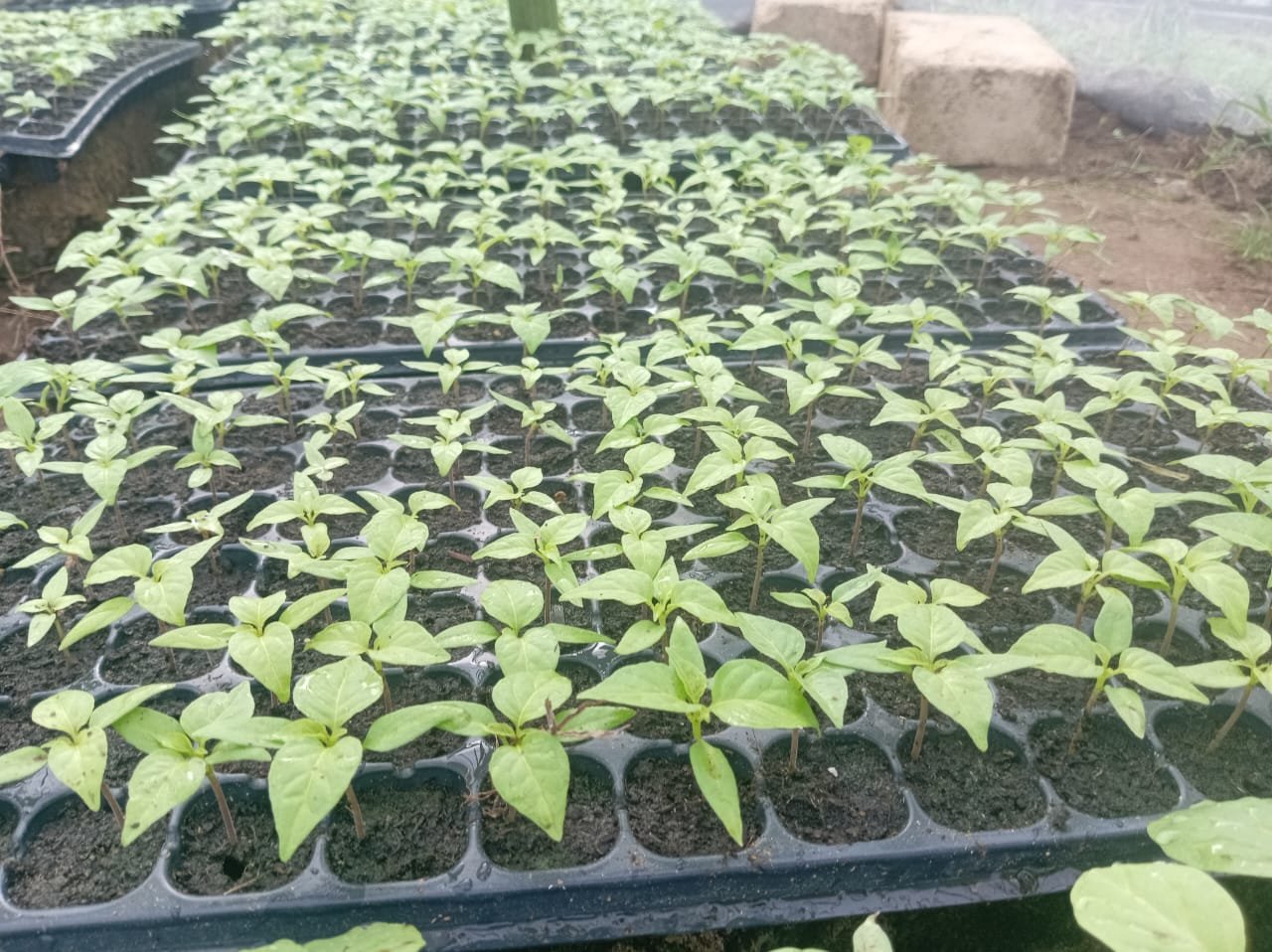
More pepper seedlings ready for field establishment. Photo supplied by IbomServices.
3. Prepare a well-drained field for Uyo’s rains
Choose a sunny plot with an outlet for excess rain. Avoid low ground that remains flooded after storms. Prepare raised beds or ridges and clear drainage channels before planting where needed. Akwa Ibom receives substantial rainfall, so drainage and airflow are central to Habanero farming in Uyo: waterlogged roots and persistently wet foliage can undermine a healthy crop.
Rotate pepper with unrelated crops where possible; avoid planting Habanero immediately after pepper, tomato, eggplant or other related crops on the same ground. Remove diseased crop remains and keep the plot and edges free of weeds. A soil test, when available, can guide nutrient decisions and reduce unnecessary fertilizer expense.
4. Transplant and leave room for airflow
Transplant during a cooler part of the day when the soil is moist but not saturated. Water seedlings before lifting them, keep the roots intact and set each plant at about the same depth it grew in the nursery. Firm the soil gently and water after transplanting. Replace seedlings that fail early so the crop develops evenly.
Spacing depends on the Habanero cultivar, soil fertility, bed design and whether plants will be staked. Follow the seed supplier’s directions or local extension advice. Give plants enough room to weed, inspect and harvest between them; crowding traps humidity and makes disease scouting harder. Rutgers Cooperative Extension’s Habanero guide also emphasizes raised beds and routine scouting, although its exact layout was developed for another region and should not be copied blindly in Akwa Ibom.
5. Manage moisture, nutrients and weeds
Keep moisture reasonably steady while seedlings establish, flower and set fruit. In wet periods, clear drains and avoid extra irrigation. In dry spells, water near the base before plants become severely stressed. Mulch can reduce weeds and help steady soil moisture, but do not let the bed remain saturated or pack wet material against stems.
Use only well-decomposed compost or manure. Apply mineral fertilizer based on a soil test, the product label and advice from an agricultural extension officer. Avoid guessing a heavy application or placing fertilizer against stems. Weed early and carefully so you do not damage shallow roots. Stake plants if the cultivar grows tall or fruit load bends branches.
6. Scout for pests and disease
Inspect leaf undersides, new shoots, flowers and fruit at least weekly. Look for aphids, whiteflies, thrips, mites, caterpillars, leaf spots, wilting, curled or mottled leaves, and dark or soft fruit lesions. Remove badly affected material where appropriate, clean tools, control weeds and avoid moving from a diseased patch to a healthy one without cleaning hands and equipment.
Do not spray an unidentified chemical or mix pesticides by guesswork. If treatment may be needed, ask a qualified local extension officer or registered agro-dealer to identify the problem and recommend a product approved for the crop. Follow its label, protective-equipment instructions, re-entry period and pre-harvest interval exactly.
7. Harvest, sort and handle Habanero safely
Harvest at the colour and maturity stage buyers request. Ripe fruit colour varies by cultivar, so follow the seed description rather than assuming every Habanero turns orange or red. Pick firm, clean pods gently with scissors or a careful twist so branches are not broken. Sort damaged or diseased fruit and keep peppers shaded, clean and ventilated.
Habanero is extremely hot. Use gloves when harvesting or sorting, avoid touching eyes and face, wash hands and tools after handling, and keep pods away from children. Arrange packaging and transport before harvest so fresh peppers are not left in direct sun. If drying, use a clean, protected area and dry pods thoroughly before storage to reduce mould risk.
8. Check demand and farm costs before expanding
Speak with pepper traders, restaurants, food vendors and processors in Uyo and nearby communities. Confirm whether they want fresh green fruit, fully ripe Habanero, a particular colour, bulk quantities or regular delivery. Budget for seed, nursery materials, bed preparation, labour, drainage, water, mulch, crop care, harvest containers, packaging and transport.
Track planting dates, labour, inputs, harvest weight, grade, price and losses. Compare sales with every cost before increasing acreage. Prices and input costs change by season and supplier, so use current local quotations rather than relying on a fixed online profit promise.
Common Habanero farming mistakes to avoid
- Planting in poorly drained soil without a plan for heavy rain.
- Buying unlabelled seed or assuming all hot peppers are Habanero.
- Transplanting weak seedlings or crowding plants too closely.
- Applying fertilizer or pesticides without identifying the need and following labels.
- Ignoring early pest symptoms, weeds and diseased crop debris.
- Harvesting without gloves or leaving fresh peppers exposed to heat.
- Expanding before checking buyer demand, transport and real production costs.
Habanero pepper farming in Uyo: quick checklist
- Confirm the Habanero type, fruit colour and buyer demand.
- Get fresh, labelled seed and raise seedlings in a clean nursery.
- Choose a sunny site and prepare raised beds or drains where needed.
- Transplant sturdy seedlings with spacing suited to the cultivar.
- Manage moisture, nutrition, weeds and crop health consistently.
- Harvest safely, sort promptly and record costs, yields and sales.
Want help cultivating Habanero in Uyo?
IbomServices is welcoming enquiries from people who want hands-on help cultivating Habanero pepper in Uyo and Akwa Ibom. Tell us your location, plot size and what stage you are at—from plot preparation and raising seedlings to transplanting and crop care. We’ll discuss the work, availability and quote with you before you commit.
Sources and further reading
Reviews & Ratings
No reviews yet. Be the first to review!